Version Drift Aesthetics: When Process Becomes the Artwork


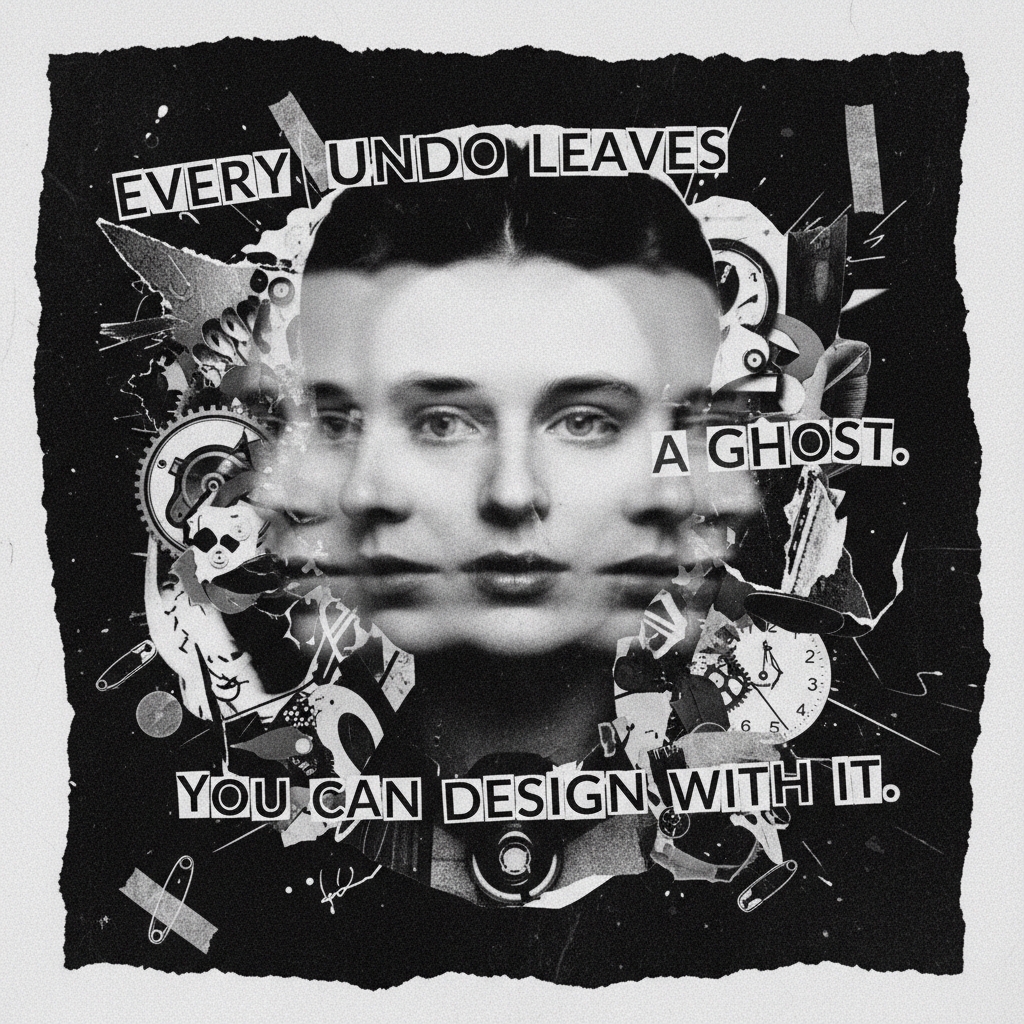
Version Drift Aesthetics: Turning File History, Iterations, and Undo Data into Visual Storytelling
Every digital artwork carries a hidden history. Brush strokes that were erased. Models that were reshaped. Colour grades that almost worked. Usually this history is treated as clutter and aggressively cleaned away.
A growing experimental niche is doing the opposite. Artists are deliberately exposing, blending, or transforming version history and iteration data into the final piece. The artwork becomes not just an image, but a record of decision making, doubt, refinement, and change.
This is not about messy work. It is about honest process.
Why this is underexplored
Most pipelines reward clean final outputs. Process is invisible, archived, or deleted. Yet audiences increasingly value transparency and human presence in digital work. Version drift aesthetics live in the gap between finished art and creative memory, a space most tools already capture but few artists use intentionally.
How the workflow works
- Save versions aggressively or enable full history tracking.
- Export intermediate states, layer comps, or geometry snapshots.
- Stack, blend, or spatially offset these versions in 2D or 3D space.
- Use opacity, depth, or color shifts to suggest temporal movement rather than mistakes.
The image becomes time compressed into a single frame.
A concrete example
A 3D character artist creates a portrait where the final face is crisp, but earlier sculpt passes faintly echo behind it. Jawlines drift. Eye positions slightly misalign. The effect feels emotional rather than technical, like watching confidence settle into place. Viewers read vulnerability and growth without being told anything explicitly.
Tools that make this possible
- Photoshop layer comps and history snapshots used as visual assets.
- Blender shape keys storing previous modeling decisions.
- Git LFS or simple folder based versioning for exporting meaningful diffs.
- After Effects to animate opacity or parallax between iterations.
- Notion or Figma version history exports for hybrid design art experiments.
Actionable creative experiments
- Treat every saved version as a potential texture or mask.
- Overlay early and late colour grades to reveal emotional direction.
- Push older iterations backward in Z space to create depth from time.
- Use motion blur or grain only on previous versions, not the final one.
- Design a piece where the most visible element is what almost made it.
Mindset shift
Perfection is static. Process is alive. When you let iteration show, your work gains narrative weight and human credibility that polish alone cannot create.
Thought provoking question
If your audience could see every meaningful decision behind your work, which moments of uncertainty would deepen the story rather than weaken it?